
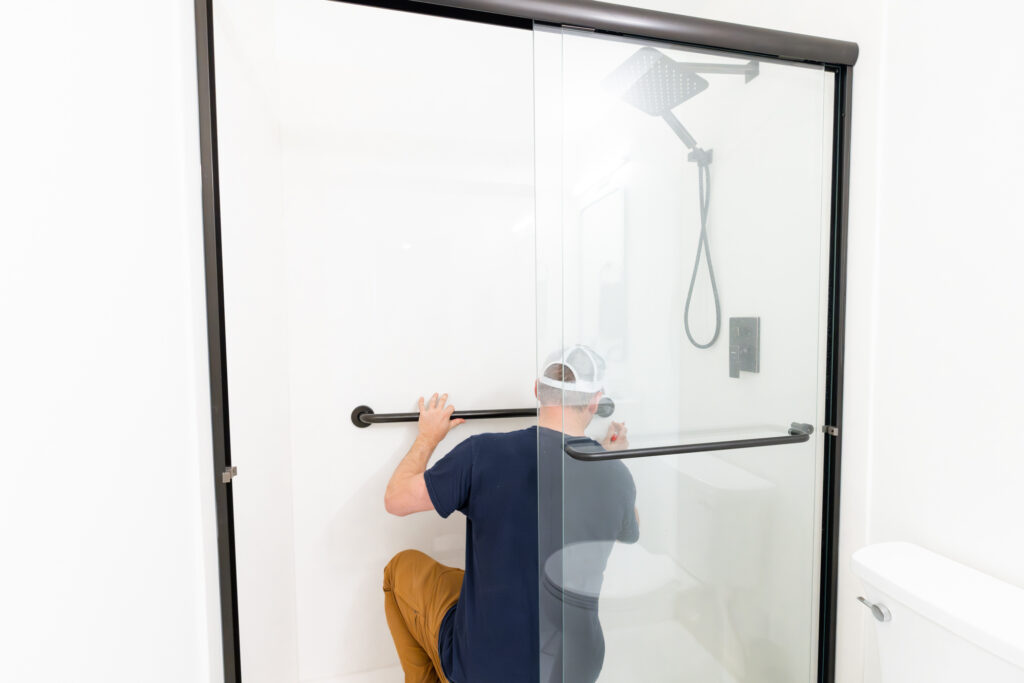
Standard bathtubs and showers can become a fall risk for aging adults and those who want to remain in their homes as they age. To minimize risk, many homeowners opt for home modifications like a walk-in shower or a walk-in tub.
Walk-in showers and tubs vary in areas like cost, layout, and usability.
In this guide, we’ll explore the differences so you can make an informed decision rather than choosing what sounds easiest.
What Is a Walk-In Shower?
A walk-in shower replaces your existing tub with a shower featuring a low- or zero-threshold entry. Instead of stepping over a tub wall, you step through a wide opening with a threshold as low as zero inches off the floor. This feature makes the biggest safety difference for most seniors.
Independent Home Solutions (IHS) installs walk-in showers with thresholds ranging from 0 to 4 inches, depending on your needs.
Other options, such as a roll-in shower, are fully accessible to wheelchair users. Interior features include fixed or fold-down seats, grab bars, and handheld showerheads.
Converting a standard tub to a walk-in shower typically takes two days to install.
What Is a Walk-In Tub?
A walk-in tub looks more like a traditional bathtub but has a door built into the side. You open the door, step in, close the door, sit down, and fill the tub. When you are done, you drain the tub before opening the door and stepping out.
Walk-in tubs often include therapeutic features like jets, air baths, and heated seating. They are appealing to people who want a soaking bath experience without the risk of climbing over a high tub wall.
Safety Comparisons: Walk-in Shower vs Tub
Both options are meaningfully safer than a standard tub, but each has unique risks.
- Walk-in showers eliminate most of the risk of entry and exit. The low threshold means there is nothing significant to step over. Falls happen most often when getting in and out of a tub, and a zero-threshold shower removes that hazard almost entirely. The main safety concern with a walk-in shower is slipping on a wet floor, which is addressed with non-slip flooring, a shower seat, and grab bars.
- Walk-in tubs reduce the risk of stepping over a high tub wall. But they introduce a different concern: you must sit inside the tub while it fills and remain seated while it drains before you can get out. Depending on the tub size, it can take 10 to 15 minutes each way. For someone with circulation issues, arthritis, or joint pain, sitting in a cooling tub while it drains is not a minor inconvenience. There is also the door seal. The door must be closed and latched securely for the tub to hold water. If the seal wears over time, leaking can become an issue.
For most seniors, walk-in showers are the safer day-to-day option. They are faster to use, involve less time in one position, and present fewer mechanical parts that can fail.
Who Is Each Option Best For?
Walk-in showers are a better fit if:
- You want a faster, lower-maintenance bathing routine
- You use a walker, a cane, or a wheelchair
- You have balance concerns, joint pain, or fatigue during bathing
- You want a zero-threshold entry for full accessibility
- You live with someone who also needs accessible bathing
- You want to maximize future resale value and home accessibility
Walk-in tubs are a better fit if:
- You genuinely enjoy baths and want to continue that routine safely
- You have arthritis or muscle pain that benefits from warm water immersion or jets
- You are comfortable with the fill-and-drain method
- You do not use mobility aids like a wheelchair or walker
Cost Comparison
Walk-in showers generally cost less than walk-in tubs, though both vary depending on your bathroom size, the features you choose, and the complexity of installation.
Walk-in shower conversions at IHS can typically be completed in one to two days and cost between $12,000 to $15,000.
Walk-in tub installations can take longer, depending on plumbing requirements, and may incur ongoing operational costs to note. Because they require more hot water to fill than a shower, monthly water and water-heating costs will be higher over time.
From a home value perspective, walk-in showers tend to appeal to a broader range of buyers if you ever sell. Walk-in tubs are more niche.
What About Insurance and Financial Help?
Neither walk-in showers nor walk-in tubs are typically covered by standard Medicare. However, some options may help with costs:
- Medicare Advantage plans sometimes include home modification benefits. It is worth calling your plan to ask specifically.
- Veterans’ benefits through the VA’s Specially Adapted Housing or Special Home Adaptation programs may cover bathroom modifications for qualifying veterans.
- Pennsylvania’s PACE/PACENET program assists with prescription costs, which can free up household budget for home modifications.
- The Pennsylvania Department of Aging has resources and referrals for seniors seeking home modification assistance. Local Area Agencies on Aging in Lancaster, York, Harrisburg, and Dauphin County can connect you with programs you may qualify for.
IHS offers free in-home estimates so you know exactly what you are looking at before committing to anything.
Questions to Ask Before You Decide
Before selecting a walk-in shower or tub, there are a few questions you can ask to determine which one will work best for your home.
- How do you currently bathe? If you prefer baths over showers, or vice versa, that’s the easiest indicator of which type will work best for you.
- Do other people need to use it? If you’re trying to accommodate multiple people in a home, then a walk-in shower is likely a better option. Walk-in tubs take longer to fill and may not be ideal for everyone.
- Will someone in your home need a wheelchair-accessible bathroom? A roll-in shower is the only fully wheelchair-accessible option between the two.
- Is there a lot of space in the bathroom? Walk-in tubs need a tub-sized footprint, and walk-in showers leave more wiggle room for layout and installation.
- Have you spoken to your doctor or physical therapist? Sometimes you can get recommendations from a doctor or physical therapist. Ask what they think will work best in your situation.
Frequently Asked Questions
Can you convert a walk-in tub back to a regular tub later?
Yes, it’s possible, but it will cost you. The best approach is to decide which one works best for your long-term needs.
How long does a walk-in shower conversion take?
Walk-in shower installation typically takes two days. During installation, you cannot use the bathroom.
Is a walk-in shower hard to keep clean?
No, usually a walk-in shower is easier to clean than a walk-in tub. It has fewer seams, no door gaskets to scrub, and simpler surfaces.
Who installs walk-in showers in Central Pennsylvania?
Call Independent Home Solutions at 717-393-8213 for a free in-home assessment. We can install walk-in showers in Harrisburg, Lancaster, Reading, and York, Pennsylvania.

