If you’ve been told your staircase is too narrow for a stair lift, you’ve probably been talking to the wrong people. Reading homeowners deal with this all the time, older homes with staircases that feel like they were built for people half our size. But here’s the reality: narrow staircases aren’t the dealbreaker they used to be.
Today’s stair lifts are built for exactly these situations. Whether you’re living in a century-old home in the Historic District or a cozy rancher in Exeter Township, there’s a solution that’ll work without tearing up your house or blocking the hallway.
In this article, we’ll explain how stair lift installation works in Reading homes with narrow staircases and what you should consider before purchasing the device.
Understanding Narrow Staircase Challenges in Reading Homes
Reading’s housing stock includes many older properties with staircases that weren’t designed with accessibility in mind. You’ve got tight turns, cramped landings, and widths that make you wonder how furniture ever made it upstairs in the first place.
These design quirks create real concerns. Will the lift block the stairs for other people? Can it handle a turn at the bottom? What happens when the rail ends right where your door swings open?
These are fair questions, and they all have answers. The key is understanding that narrow doesn’t mean impossible; it just means you need the right equipment and someone who knows what they’re doing.
Space-Saving Stair Lift Features That Make a Difference
Rail Systems Built for Tight Spaces
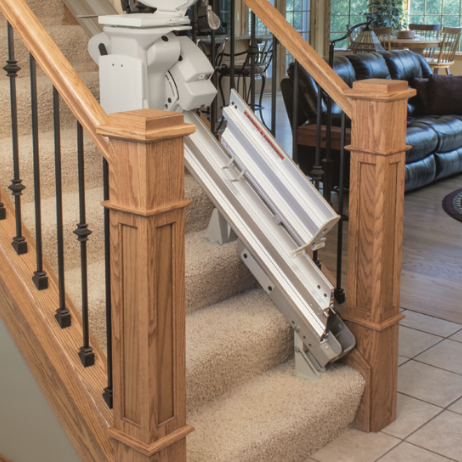
The rail is where space savings start. Modern systems mount directly to your stair treads, not your walls, which keeps installation simple and your walls in one piece. The rail itself typically sticks out about 10-12 inches from the wall, enough to be secure, but not enough to turn your staircase into an obstacle course.
When someone needs to walk past, the rail stays put. It’s the seat and other components that move out of the way.
Components That Fold Away
The real magic happens with the parts you actually sit on. Manufacturers have figured out how to make everything collapsible without sacrificing safety or comfort.
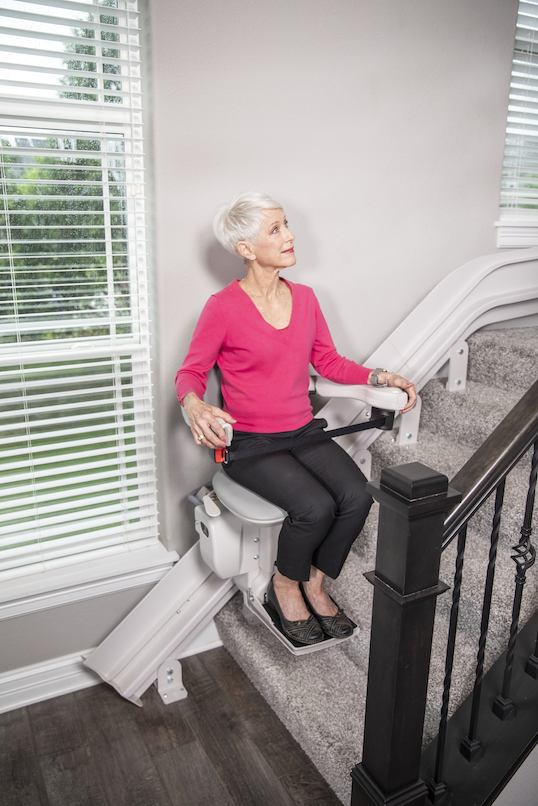
Seats flip up and lock flat against the wall. Footrests retract automatically when you stand up. Armrests swing inward to shave off a few more inches. Even the controls are designed to sit flush rather than stick out where someone might bump into them.
You operate these features with basic motions, usually a push or a lift. Nothing complicated, nothing that requires strength or dexterity you might not have.
Custom Rail Lengths for Short Runs
If your staircase only covers half a story or connects to a landing partway up, you don’t need a rail that goes on forever. Custom measurements mean the rail ends exactly where it should, without extra length hanging over at the top or bottom.
This precision matters most when you’re already tight on space. Every foot counts, and you don’t want to waste any of it on equipment you don’t need.
What You Need to Measure Before Moving Forward
Before anyone can tell you what’ll work, you need to know what you’re working with. Here’s what to measure:
Width at the narrowest point: Grab a tape measure and check wall-to-wall. If you’ve got 28 to 30 inches, you’re in business for most compact models.
Height and depth of your steps: Most stairs follow standard dimensions, but if yours are unusually steep or shallow, it affects which models will work safely.
Space at the top and bottom: You need room to get on and off the lift. Measure the floor space at both ends; you’re looking for about 2-3 feet of clearance.
Anything in the way: Look for radiators, light switches, door frames, baseboards, or anything else that might interfere with where the rail needs to go.
A professional installer will catch things you might miss, like whether your stairs can support the weight or if there’s wiring in the wall that’ll cause problems. They’ve seen every configuration Reading houses can throw at them.
Installation Considerations for Compact Spaces
Installing a stair lift in a narrow space requires more than just showing up with tools. The installer needs to understand your home’s specific layout and how you’ll actually use the equipment day to day.
They’ll look at how the rail mounts to your particular stair construction. They’ll test door clearances and traffic flow. They’ll make sure the charging point doesn’t end up in a spot where you’ll trip over the cord.
Good installers also think about the people who aren’t using the lift. If other family members still use the stairs, the equipment can’t become a hazard to them either.
Cost Factors for Narrow Staircase Solutions
Narrow staircases don’t automatically mean higher costs, but certain features do add up. Straight stair lifts in Reading typically cost between $3,400 and $10,000. If your staircase has curves or turns, expect to pay more, often $8,000-$15,000, because those stair lift units are custom-fabricated to match your exact layout.
Compact models with extra folding features might cost slightly more than standard versions, but the price difference usually isn’t dramatic. You’re paying for engineering that makes better use of limited space, not luxury features you don’t need.
Factor in installation, which can take anywhere from a few hours to a full day, depending on complexity. Most companies include this in their quote, but confirm that upfront so you’re not surprised.
Choosing the Right Provider in Reading, PA
Not every stair lift company has experience working with narrow staircases in older homes. You want someone who’s dealt with Reading’s housing stock before and knows the common challenges.
Ask about their process for handling tight spaces. Do they offer home assessments before quoting? Can they show you examples of similar installations? What brands do they carry, and why?
Also, ask about ongoing maintenance and repair service. A stair lift is a mechanical device that will need occasional attention. Having a local provider who can respond quickly matters more than you might think.
Frequently Asked Questions
What’s the minimum width needed for a stair lift?
Most compact stair lifts need about 28 to 30 inches of clear width. Some manufacturers make models that work with as little as 27 inches, but those are specialty units that not every installer carries.
Will a stair lift damage my walls or stairs?
No, stair lifts don’t damage your walls because the rail mounts to the stair treads themselves using brackets, not to your walls. When you remove the lift later, you’re left with small holes in the treads that can be easily filled and refinished.
Can other people still use the stairs?
Yes, when the seat, footrest, and armrests are folded up, they leave enough clearance for people to walk past. The rail itself doesn’t move, but it’s positioned close enough to the wall that it doesn’t block the stairway.
How long does installation take?
Installing straight staircases generally takes one day. Curved stair lifts or multi-level installations can take one to two days because the rail needs to be custom-built and precisely fitted.
Do I need permits to install a stair lift in Reading?
Typically, you don’t need permits to install stair lifts in Reading, PA. Stair lifts are considered removable medical equipment, not permanent home modifications. However, if you live in a historic district or HOA-governed property, check with your local authorities first.
What happens during a power outage?
Most stair lifts run on rechargeable batteries that charge while they’re not in use. Even without power, you’ll have enough battery life for several trips up and down. Depending on the brand and model, some stair lifts can also be operated manually in emergencies.
Can a stair lift handle steep or unusually shaped stairs?
Yes, stair lifts can handle tricky staircases within limits. Stair lift rails can be configured for steep staircases, and curved systems handle irregular shapes. The installer will assess whether your specific staircase falls within safe operating parameters.