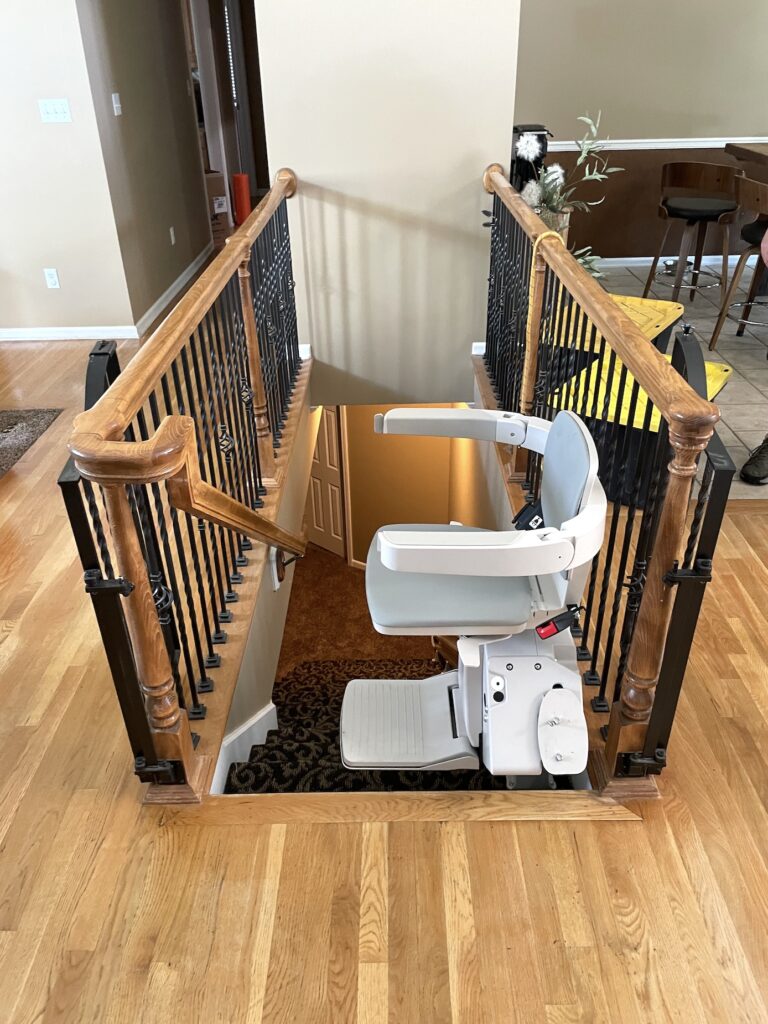

Harrisburg’s historic homes come with character and charm, and often feature staircases that weren’t built with modern accessibility in mind. If you’re dealing with a narrow, steep, or unusually configured staircase, you’ve probably wondered whether a stair lift is even possible.
The answer is yes. Stair lift manufacturers have spent years designing equipment specifically for small staircases, tight turns, and limited space.
In this article, we’ll cover what you need to know about installing stair lifts in Harrisburg’s smaller staircases.
Why Are Small Staircases a Challenge?
Many Pennsylvania homes were built before 1950, when staircase dimensions were often tighter than today’s standards. You’ll find widths that barely clear 30 inches, steep risers that make climbing difficult, and turns that seem impossible to navigate with any kind of equipment.
These design constraints raise legitimate concerns. Will the lift block access for other people? Can it handle the turn at the landing? What happens if there’s a radiator or window at the bottom of the stairs?
The good news is that compact stair lift technology has addressed these challenges. Modern stair lift units are built to operate in spaces that were previously impossible.
Compact Stair Lift Features for Harrisburg Homes
1. Rail Systems Designed for Narrow Spaces
The rail is where space efficiency starts. Modern rails mount directly to your stair treads using brackets, not to the walls. This approach keeps installation simple and your walls intact.
The rail itself typically extends 10 to 12 inches from the wall, enough for stability without turning your staircase into an obstacle. When the seat folds up, you’re left with a narrow rail that runs along the wall, leaving the majority of the staircase clear for others to use.
2. Folding Seats and Components
The seat, armrests, and footrest all fold away when not in use. This isn’t just a nice-to-have feature for small staircases; it’s essential.
Seats fold vertically against the wall and lock in place. Footrests retract automatically when you stand up. Armrests pivot inward to reduce the overall width. These mechanisms operate with simple movements, nothing that requires unusual strength or coordination.
When everything’s folded, the total width from the wall is often 12 to 15 inches or less, leaving adequate room for family members who still use the stairs.
3. Custom Rail Lengths
Short staircases don’t need long rails. If your stairs only go up half a floor or connect different levels over eight to 10 steps, the rail gets cut to match exactly. This precision prevents unnecessary overhang at the top or bottom, which matters when you’re already working with limited space.
Custom lengths also help reduce costs, so you’re not paying for extra rail you don’t need.
What Should You Measure Before Installation?
Accurate measurements determine which stair lift models will work in your space. Here’s what matters:
- Staircase width: Measure wall-to-wall at the narrowest point. Most compact models need a minimum of 28 to 30 inches. Some specialty units are available in 27 inches, but availability is limited.
- Step dimensions: Measure the depth of each tread and the height of each riser. Unusually steep or shallow configurations may require specific models rated for non-standard stairs.
- Top and bottom clearance: You need approximately two to three feet of floor space at both ends for safe entry and exit. Measure from the first/last step to any walls, doors, or furniture.
- Obstructions: Note radiators, light switches, outlets, door swings, windows, or architectural details that might interfere with the rail path or seat operation.
A professional stair lift installer will verify these measurements and catch things you might miss, such as whether your stair construction can support the weight or whether there’s hidden wiring that creates installation challenges.
Stair Lift Installation Process in Harrisburg
Installing a stair lift in a small Harrisburg staircase follows a predictable process, though timing varies based on your configuration.
Step 1. Free Assessment: An installer visits your home to measure the staircase, evaluate the space, and discuss your mobility needs. This takes 30 to 60 minutes and results in a detailed quote.
Step 2. Equipment Selection: For straight staircases, equipment is often available within days. Curved or custom configurations require manufacturing time, typically four to eight weeks.
Step 3. Installation: Straight installations usually take two to four hours. Curved systems can take most of a day due to the precision required to properly align the custom rail.
Step 4. Questions and Training: Before leaving, the installer demonstrates all features, shows you how to fold components, and answers questions about operation and maintenance.
The installation doesn’t damage your home, leaving only small bracket holes in the stair treads. If you remove the lift later, these holes fill easily and can be refinished.
How Much Do Stair Lifts Cost for Narrow Staircases?
Small staircases don’t automatically mean higher costs, though certain factors do affect pricing.
- Straight Stair Lifts: Expect $3,400-$10,000 for straight stair lift units in Harrisburg, including installation. Compact designs with enhanced folding features may cost slightly more than standard models, but the difference is usually modest.
- Curved Stair Lifts: Custom configurations run $3,400 to $27,000 or higher. The price reflects the custom fabrication required to match your specific layout. Multiple turns or complex curves cost more than simple bends.
- Installation Complexity: Tight spaces sometimes require additional time or specialized installation techniques, which can add to labor costs. Most companies include installation in their quotes, but confirm this upfront.
How Do You Select a Stair Lift for Narrow Staircases?
Not every stair lift model works well in small spaces. Look for these features:
- Minimum width requirements: Check the manufacturer’s specs. Some models need 32 inches; others work with 28 inches. Match the equipment to your actual measurements, not aspirational ones.
- Folding mechanisms: Test how the seat folds if possible. Some designs fold more compactly than others. Even a difference of two to three inches matters in tight spaces.
- Rail profile: Slimmer rails take up less visual and physical space. Bruno’s Elite model, for example, uses a particularly narrow rail design that works well in constrained areas.
- Swivel seat: A powered swivel seat at the top and bottom makes mounting and dismounting safer in tight landing areas. This feature costs extra but proves valuable in small spaces.
Finding a Stair Lift Installer in Harrisburg
Look for installers with specific experience in Harrisburg’s older housing stock. Someone who regularly works with compact staircases in historic homes understands the challenges better than a company that mostly handles newer, larger houses.
Ask these questions:
- Do you offer free in-home assessments?
- What’s your experience with staircases under 32 inches wide?
- Which brands do you carry that work in small spaces?
- What’s included in your installation quote?
- Do you provide ongoing maintenance and repair services?
A good installer won’t pressure you into equipment that doesn’t fit your space properly. They should be honest about what will and won’t work.
FAQs About Small Staircases
What’s the absolute minimum width for a stair lift?
Most manufacturers specify 28 to 30 inches as the minimum. Some specialty models work with 27 inches, but these require specific brands and may cost more.
Will other people be able to use the stairs if I have a stair lift?
Yes, when the seat and components are folded up. The rail stays in place but is positioned close to the wall, leaving a clear walking path.
Can a stair lift work on very steep stairs?
Modern lifts accommodate stairs with pitch angles up to about 75 degrees. Your installer will measure and confirm whether your staircase falls within acceptable limits.
How much maintenance do compact models need?
The same as standard models: monthly cleaning, annual professional service, and battery replacement every three to five years. Compact designs don’t require more maintenance than larger units.
What if my staircase has a door at the top or bottom?
The rail can often curve to position you away from the door swing. Your installer will verify clearances during the assessment.
Do compact stair lifts have weight limits?
Standard models handle up to 300 pounds. Heavy-duty versions accommodate 400 to 600 pounds, though they may not work in the narrowest staircases due to their size.
Getting Started
If you’re ready to explore options for your Harrisburg staircase, call us at 717-393-8213 to schedule your free assessment today.
Small staircases don’t have to limit your mobility or force you out of your home. With the right equipment and experienced installation, most Harrisburg homes can accommodate stair lifts, even in spaces that seem impossible at first glance.