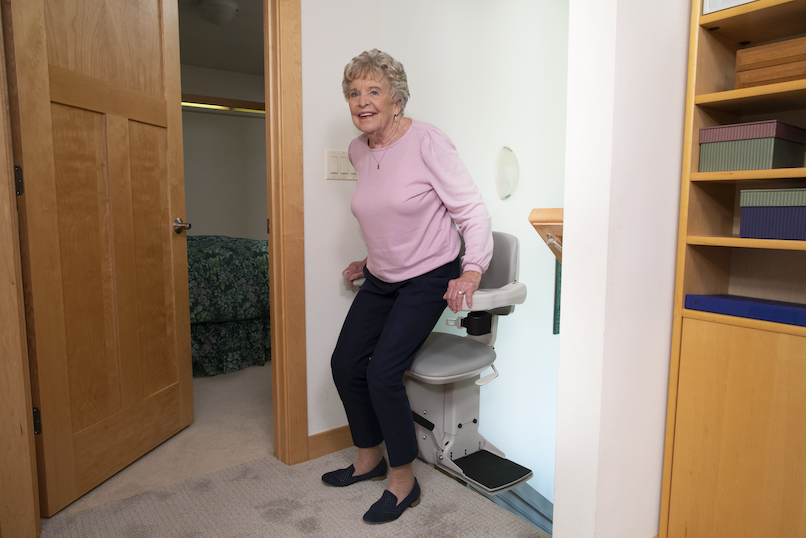
Living in a home with a compact staircase doesn’t mean you have to compromise on mobility or safety. Many Lancaster homeowners assume their narrow or short staircases can’t accommodate a stair lift, but modern solutions have made accessibility possible even in the tightest spaces.
Why Do Small Staircases Need Special Consideration?
Lancaster’s historic homes and traditional Pennsylvania architecture often feature staircases that weren’t designed with today’s accessibility needs in mind. Narrow hallways, tight turns at the base or top of stairs, and limited landing space create unique challenges that require thoughtful solutions.
The good news? Stair lift technology has evolved specifically to address these constraints. Manufacturers now offer compact designs that fit staircases as narrow as 28 inches while still providing safe, reliable operation.
Compact Stair Lift Solutions That Work
Slim Rail Designs
Modern stair lifts use rail systems that mount close to the wall, typically extending only 10-12 inches from the baseboard. This leaves plenty of clearance for family members who still use the stairs on foot. The rail sits on the stair treads themselves rather than the wall, which means your walls stay intact and the installation process remains straightforward.
Folding Features
Space-saving features make all the difference in smaller homes. Look for models with:
- Seats that fold up flat against the wall when not in use
- Footrests that tuck away automatically
- Armrests that pivot inward to reduce the profile
- Compact control panels that don’t protrude into walkways
These folding mechanisms typically activate with a simple push or pull, making them easy to operate while keeping your stairway accessible to others.
Rail Length Options
Short staircases benefit from custom rail measurements. Whether your stairs have 8 steps or 13, the rail gets cut to the exact length needed. This precision prevents unnecessary overhang at the top or bottom of your staircase, which is especially important when space is already limited.
How to Navigate Tight Corners and Landing Areas
Many Lancaster homes have staircases with a landing or a turn partway up. This adds complexity, but curved rail systems handle these configurations effectively. The rail follows your staircase’s exact path, whether that includes a 90-degree turn, a 180-degree switchback, or a small landing platform.
At the top and bottom of your stairs, the rail can curve away from the staircase edge, positioning the seat so you can safely get on and off without blocking doorways or hallways. This feature proves especially valuable when the staircase opens directly into a room with minimal clearance.
What Should You Measure Before Installation?
Getting accurate measurements helps determine which models will work in your space. Here’s what matters:
Staircase width: Measure from wall to wall at the narrowest point. Most compact models need a minimum of 28-30 inches.
Step depth and height: Standard risers work with all models, but unusually steep or shallow steps may need specific configurations.
Clearance at top and bottom: Measure the floor space at both ends where the rail will curve or end. You’ll need roughly 2-3 feet for safe mounting and dismounting.
Obstructions: Note any radiators, light switches, door swings, or architectural details that might interfere with the rail path.
A professional assessment takes these measurements and accounts for factors you might not consider, like weight capacity requirements and any future changes