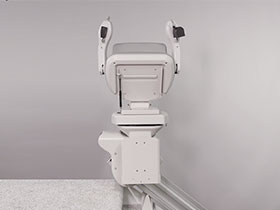
There are many types of mobility devices that help homeowners access their entire home. If you’re struggling to move between floors, the safest options include stair lifts and home elevators.
Stair lifts and home elevators are very different, and we’ll explore the costs, installation process, and more.
Quick Overview
- Stair lifts are more affordable than home elevators.
- Home elevators are ideal for wheelchair users, and stair lifts are ideal for those who can transfer themself into the seat and walk around on their own.
What’s the Price Difference Between Stair Lifts and Home Elevators?
A straight stair lift in Central Pennsylvania typically costs between $3,400 and $10,000 installed.
A home elevator starts around $20,000 and can reach $60,000 or more once you factor in the structural work most homes require.
What Drives the Cost Difference?
Stair lift installation is a fairly simple process. A technician mounts the rail to your stair treads, connects the electrical system, and completes the job in a matter of hours. Your walls stay intact, and there’s no construction involved.
A home elevator is a much larger undertaking. Most installations require a dedicated shaft, structural modifications, permits, and multiple contractors working over several days or weeks. Even the more compact pneumatic elevator models, which skip the traditional shaft, typically run $15,000 to $30,000 before installation is added.
What About Curved Staircases in Pennsylvania Homes?
Older homes throughout the Harrisburg, Lancaster, Reading, and York areas sometimes have curved or L-shaped staircases.
A curved stair lift costs more than a straight model, generally between $10,000 and $27,000, because the rail is custom-built for your specific staircase. Even so, a curved stair lift typically costs well below what a home elevator would for the same home.
When a Home Elevator Might Be Worth It
For most homeowners, a stair lift is the practical choice. But a home elevator may make more sense in certain situations. If someone in the home uses a wheelchair and cannot transfer to a stair lift seat, an elevator may be the only workable solution. Some homeowners in higher-end properties also consider the potential impact on resale value.
Ongoing Costs to Keep in Mind
Stair lifts have modest ongoing costs. Most homeowners budget a couple of hundred dollars a year for routine maintenance, and battery replacement runs $15 to $50 every few years. Home elevators carry higher annual maintenance costs
FAQs: Stair Lifts vs. Home Elevators
Why are stair lifts more affordable than home elevators?
Stair lifts are pre-fabricated rails that are easy to install on stair treads. Certified technicians can install them in less than a day, while curved units typically take 1 to 2 days and have a higher price tag.
Home elevators require much more complicated installation with a shaft, potential home modifications, and multiple contractors.
Is a home elevator better for wheelchair users?
Yes, home elevators are typically a better option for wheelchair users as they move you between floors, and you can continue using your wheelchair on each floor.