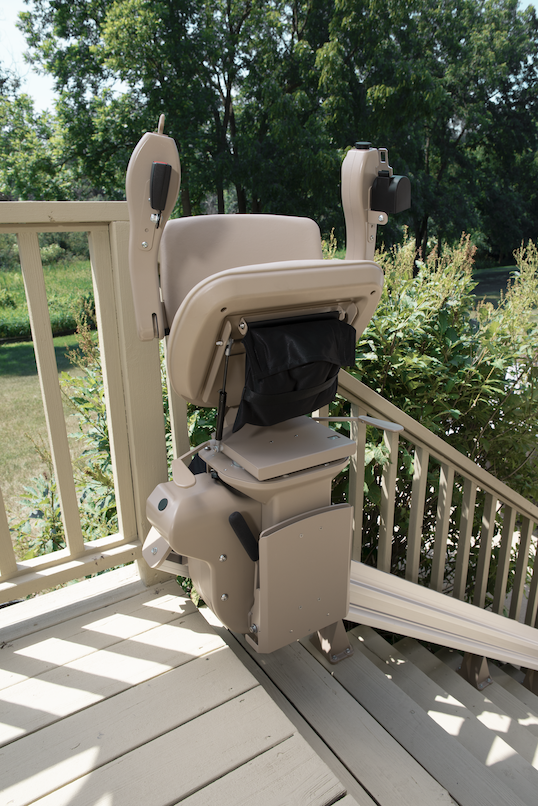

Mobility devices like stair lifts are in use multiple times throughout the day, making it important to keep them in good repair. They’re an integral part of life for those wanting to age in place and reduce fall-related injuries.
Most stair lift issues are preventable and can be managed with regular services. Not all issues can be fixed, but enough of them are that routine maintenance is worth taking seriously. Here’s a practical breakdown of what you need to consider for stair lift maintenance.
Quick Overview
- Monthly cleaning and visual checks are quick and easy to do yourself
- Battery replacement every one to three years is the most important maintenance task
- Annual professional inspections catch problems before they become expensive repairs
- Ignoring the rail and drive system is where most owners fall short
Stair Lift Maintenance Schedule: At a Glance
- Monthly: Clean the rail, wipe down the seat and controls, check charging contacts, run a full trip, and check remote batteries.
- Annually: Schedule a professional inspection covering the drive system, safety sensors, rail alignment, swivel mechanism, and electrical connections.
- Every one to three years: Replace batteries.
- As needed: Address unusual sounds, jerky movement, changes in speed, or error codes as they come up.
Monthly Maintenance: What You Can Do Yourself
Following a simple monthly maintenance schedule can keep your stair lift in good repair. These tasks should take less than ten minutes and should help you identify problems quickly.
- Wipe down the rail. Dust, pet hair, and debris accumulate on the rail, affecting how smoothly the carriage moves. Wiping it down with a dry cloth will help keep it clean. Avoid using water or household cleaners unless your manual specifically recommends them.
- Clean the seat and controls. The seat, armrests, and control panel collect dust and oils from regular use. Wiping them down with a dry or slightly damp cloth is all you need to do.
- Check the charging contacts. The charging strips along the rail need to make clean contact to keep the batteries topped off. If they look dirty or corroded, wipe them gently with a dry cloth. If they appear too corroded, you can contact a local dealer for replacements.
- Run the lift through a full trip. Make a point of running the lift all the way up and down at least once a month, even if the primary user only travels part of the staircase. This keeps the full length of the rail in use and helps you notice if anything sounds or feels different.
- Check the remote control batteries. Remote control issues are one of the most common stair lift complaints, and the fix is usually a fresh set of AA batteries.
Battery Replacement: One of The Most Important Maintenance Tasks
Replacing stair lift batteries is essential to keeping stair lifts in good repair. You should replace them every 1 to 3 years, depending on how often you use the stair lift.
There are signs you can watch for to determine if you need to replace your stair lift battery. These include:
- Jerky, unusual movements that aren’t the typical smooth ride
- Stopping mid-trip or pausing during the journey
- Error codes on the diagnostic display
Don’t wait until it stops working entirely to replace the battery. A lift that quits mid-staircase is much more stressful than one that is replaced before it fails.
Replacement batteries typically cost $15 to $50 and can usually be swapped out at home without a service call. Check your owner’s manual for the correct battery type and the replacement steps for your specific model.
Annual Professional Inspection: What Gets Checked
Yearly maintenance is typically a more intensive check that ensures safety features and lift mechanics are functioning properly.
We recommend hiring a local stair lift company to perform an annual checkup. Here’s what they’ll check each year:
- Ensure the drive system and gearbox are working properly.
- Test safety sensors and obstruction detection to confirm they are functioning correctly. A sensor that’s slightly off calibration may not stop the lift when it should.
- Look at the track and rail alignment, which can shift over time from vibration and regular use.
- Check for signs of loose electrical cords or corrosion over time, which can cause problems that are hard to diagnose.
- Ensure the swivel seat mechanism works well, as it gets a lot of wear and tear.
Warning Signs to Watch For (Between Scheduled Maintenance)
There are issues you’ll want to be on the lookout for, even if it’s not your scheduled maintenance.
Things you should always be on the lookout for include:
- Unusual sounds. A grinding or clicking noise that wasn’t there before usually means something has changed. Don’t ignore it.
- Jerky movement. A lift that used to run smoothly but now feels rough or hesitant can indicate rail debris, a battery issue, or an early mechanical problem.
- Error codes. Most modern stair lifts have a diagnostic display that shows error codes when something is wrong. Write down the code, check your manual, and call for service if needed. Don’t just reset it and hope the problem goes away.
- Changes in speed. A lift moving noticeably slower than it used to is almost always a battery or charging system issue first. Start there.
Stair Lift Maintenance Tips: What to Avoid
If you want your stair lifts to last between ten and twenty years, there are certain things you should avoid.
- Don’t lubricate the rail yourself unless your manual specifically instructs you to and identifies the correct product. The wrong lubricant attracts debris and can damage the drive system.
- Don’t ignore error codes. Most problems are easier and cheaper to fix when they’re caught early.
- Don’t skip the annual inspection just because the lift seems to be running fine. A lot of mechanical wear isn’t obvious until it causes a failure.
FAQ: Stair Lift Maintenance
How often should I have my stair lift professionally serviced?
Once a year is the standard recommendation for most residential units. Higher-use households may benefit from more frequent visits.
Can I lubricate the rail myself?
Yes, if your owner’s manual says it’s necessary and specifies the product. Using the wrong lubricant can create more problems than it solves.
What’s the most common reason stair lifts need a service call?
The most common issues are due to battery complications, charging issues, or obstructions on the track or rail. Most of these are simple issues that can be fixed quickly.
How do I schedule a maintenance visit in Pennsylvania?
Call Independent Home Solutions at 717-393-8213. Currently, we serve residents in Harrisburg, Lancaster, Philadelphia, Reading, and York.