Stairs are a roadblock for wheelchair users. But mobility devices and home modifications can transform staircases from a hindrance to another mode of transport.
To put it simply, wheelchairs can’t go up stairs on their own, but there are several solutions to help you access every level of your home.
In this article, we’ll explore options for getting wheelchairs up stairs and how to get help.
Why Wheelchairs and Stairs Don’t Mix
Wheelchairs are designed for flat and gently sloped surfaces, not stairs. Regular staircases are too steep and narrow for a wheelchair to navigate, and attempting to go up or down stairs in a wheelchair without the right equipment is dangerous for both the user and anyone assisting them.
That said, the goal of staying in your home and accessing every part of it is completely achievable with the right modifications.
Option 1: Wheelchair Ramp
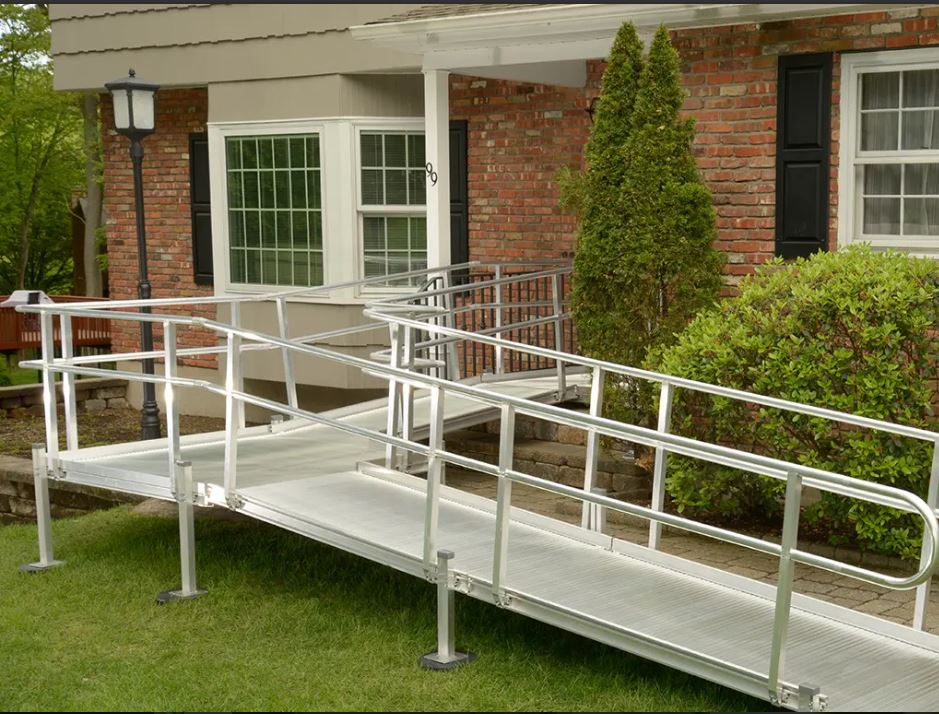
For entry points or staircases with very few steps, wheelchair ramps are a cost-effective option. Ramps let you roll in and out of your home without any assistance or mechanical equipment.
There are different types of ramps, including permanent and modular. Permanent ramps are built from wood or aluminum and attached to your home. Modular ramps are prefabricated and can be assembled on-site, making them a good option if you are renting or want something removable later.
The general rule for ramp slope is 1 inch of rise per foot of ramp length. So a 12-inch step would need at least a 12-foot ramp to be safe for a standard wheelchair. For homes with more than a couple of steps at the entry, ramps can get long, so other options may make more sense.
Independent Home Solutions installs ramps throughout Central Pennsylvania, including the Harrisburg, Lancaster, Reading, and York areas. We ensure each ramp fits your home’s specific layout and your daily routine.
Option 2: Vertical Platform Lift
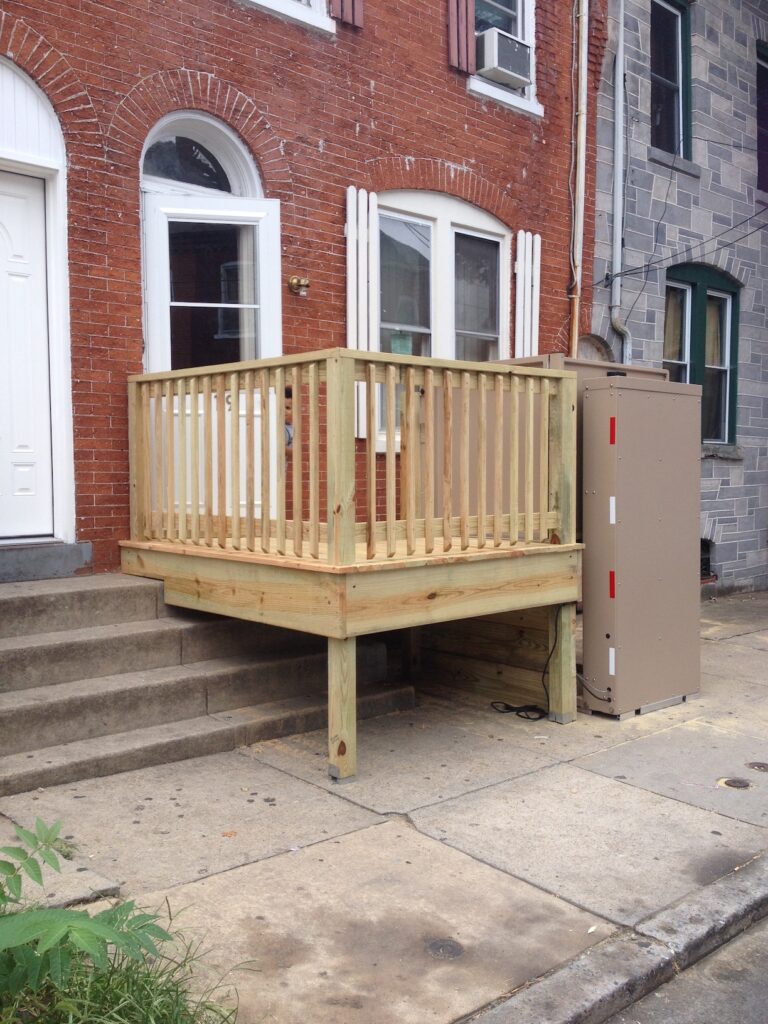
Vertical platform lifts, also called porch lifts or wheelchair lifts, are mechanical platforms that raise and lower a wheelchair.
It works similarly to a small elevator and is a good option for getting over several steps at an entry point or between floors in some home configurations.
Vertical platform lifts take up less horizontal space than a long ramp, making them a practical choice when there is not enough room to run a ramp to the required length. They do require a power connection and regular maintenance, similar to a stair lift.
Option 3: Stair Lift (With a Transfer Seat)
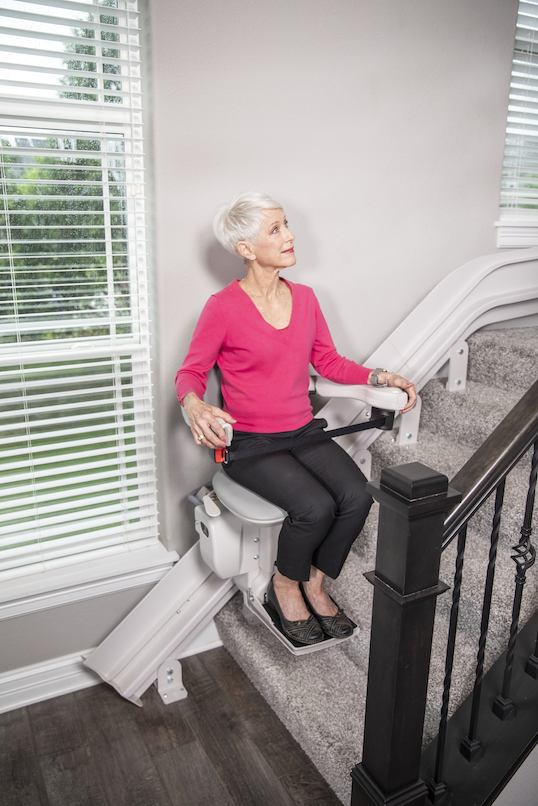
Stair lifts aren’t designed to carry a wheelchair up the stairs. However, some wheelchair users can transfer from their wheelchair to a stair lift seat at the bottom of the stairs, ride up, and transfer back into a wheelchair that is stored or waiting at the top.
This approach works for people who have enough upper-body strength and mobility to make the transfer safely. It is not right for everyone, though, and it does require a second wheelchair or transport chair to be available on the upper floor.
A physical therapist can help you assess whether this is a realistic option for your situation.
Option 4: Reconfiguring Your Living Space
For many Pennsylvania homeowners, the most practical long-term solution is rearranging the home so that everything you need on a daily basis is on one floor. A bedroom and a walk-in shower on the main level, with easy access to the kitchen and living areas, can eliminate the need to go upstairs at all.
This is not always possible, depending on the home’s layout, but it is worth considering before investing in equipment for a staircase you may rarely use.
Independent Home Solutions offers free in-home assessments throughout Central Pennsylvania. We work with aging people and those with mobility issues to find home accessibility solutions that fit the home, the budget, and the person using them.
Call us at 717-393-8213 to schedule your free assessment. We provide wheelchair ramps, platform lifts, and stair lifts.
Frequently Asked Questions
Can a power wheelchair go up stairs?
No, power wheelchairs cannot go up stairs. The most practical solutions for Pennsylvania homeowners are wheelchair ramps, platform lifts, or reconfiguring the living space.
What is the safest way to help a wheelchair user up the stairs?
Manually carrying or tilting a wheelchair up a staircase is risky for both the wheelchair user and the person assisting them. If someone needs to be helped up stairs regularly, a mechanical solution like a wheelchair ramp or platform lift is far safer than relying on manual help.
Does Medicare cover the cost of a wheelchair ramp or platform lift?
Medicare usually doesn’t cover home modifications like wheelchair ramps, stair lifts, or platform lifts. Some Medicare Advantage plans may include a home modification benefit, so it is worth checking your specific plan.
Veterans may qualify for assistance through VA Special Home Adaptation grants. Pennsylvania residents can also explore assistance through the Pennsylvania Department of Aging or local Area Agencies on Aging.
How long does wheelchair ramp installation take?
Wheelchair ramp installations typically take around one day. Modular aluminum ramps can often be installed even faster. The timeline depends on the size and complexity of the ramp and the dimensions and setup of your staircase.
Can I install mobility devices in a rental home?
Modular ramps can be installed and removed without permanent changes to the property, which makes them a good option for renters. You should still check with your landlord before making any modifications. Pennsylvania law provides some protections for tenants with disabilities who need reasonable accommodations.
Who can assess my home for wheelchair accessibility in Pennsylvania?
Independent Home Solutions serves the Harrisburg, Lancaster, Reading, and York areas. Call 717-393-8213 to schedule a free in-home assessment and find out which solutions make the most sense for your home.