Power outages can be inconvenient, especially if you use mobility devices like a stair lift to get around your home safely. If you rely on a stair lift to access different levels of your home, losing power can steal your independence.
We’ll explore exactly what you need to do in the event of a power outage, how long a battery lasts without power, and ways to keep your battery in good condition.
How Are Stair Lifts Powered?
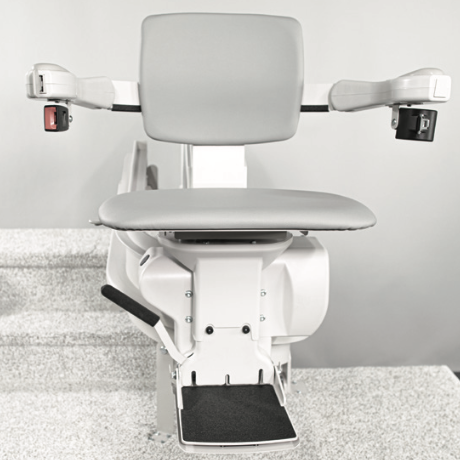
Stair lifts operate on rechargeable batteries, meaning they can run even when the power goes out (at least for a while).
Stair lift batteries are rechargeable and charge through a standard wall outlet. The motor draws power from the battery, not directly from a wall outlet, which is why it can operate without direct power for a time.
How Long Will a Stair Lift Battery Last Without Power?
Most stair lift batteries will operate for several trips up and down the stairs before they run out of juice. But this likely depends on factors such as the model, battery age, and even the weight of the person using the stair lift.
Old or poorly-maintained batteries may hold less charge, meaning you’ll have fewer trips once the power goes out.
What to Do If Your Stair Lift Stops Working During an Outage
In the event of a power outage, the stair lift should still run on battery power. If it doesn’t, there’s likely something wrong with the lift.
First, you should check that the lift is docked at the charging points at the top or bottom of the stairs. The lift will not charge if it’s parked anywhere else, for example, mid-rail, because it can only charge at the docking stations.
If the stair lift wasn’t properly docked, then the batteries likely won’t be charged, and you’ll have to wait for the power to come back on.
You’ll also need to know your battery’s age. If it hasn’t been replaced in two to three years, that may be the issue, and it’s time for a new one.
If the power comes back and the lift still doesn’t work, you should call a technician. There is likely something wrong with the electric circuit or motor that you can’t fix on your own.
How to Keep Your Stair Lift Battery in Good Shape
If you’re ever in a situation where you lose power, it’s essential that your battery is still in good condition! The good news is that it’s easy to do.
Stair lift battery basics:
- Replace batteries every two to three years (or as specified by the battery manufacturer).
- Schedule check-ups, either yearly or every other year, to catch issues before they turn into a bigger problem.
- Keep your stair lift in the docked position when you’re not using it. This ensures it’s charged at all times.
- If it’s close to replacement time, order a new battery in advance (in case things go wrong).
Frequently Asked Questions
Can I manually move a stair lift if the battery dies completely?
Yes, you can manually move a stair lift if the battery dies. You’ll first disengage the motor (with a hand-winding tool or release lever), then use a crank or socket wrench to move it to the correct position at the top or bottom of the stairs.
How do I know if my stair lift battery needs replacing?
You may notice your stair lift slowing down or performing at reduced speed. Typically, though, you’ll replace the battery at the two to three-year mark before noticing anything is wrong with it.
Does a power surge damage a stair lift?
Yes, power surges can affect stair lifts, as well as other appliances. You can prevent this by using a surge protector instead of plugging it directly into a wall socket.
Will any power outage affect my stair lift warranty?
No, power outages don’t affect stair lift warranties. You’ll still have the warranty coverage that came with the unit when you purchased it.
Looking for Stair Lift Support?
If your stair lift isn’t holding a charge or you want a technician to check the battery before outage season, call Independent Home Solutions at (717) 393-8213.
Our service areas in Pennsylvania include Harrisburg, Lancaster, Reading, and York.