Vertical Platform Lifts (VPL) vs. a Stair Lift
Vertical platform lifts and stair lifts are mobility devices that help homeowners move between different levels of their home. They are unique devices and support mobility in different ways.
In this article, we’ll explore the similarities and differences between vertical platform lifts and stair lifts, who they’re suitable for, and pricing.
What Is a Stair Lift?
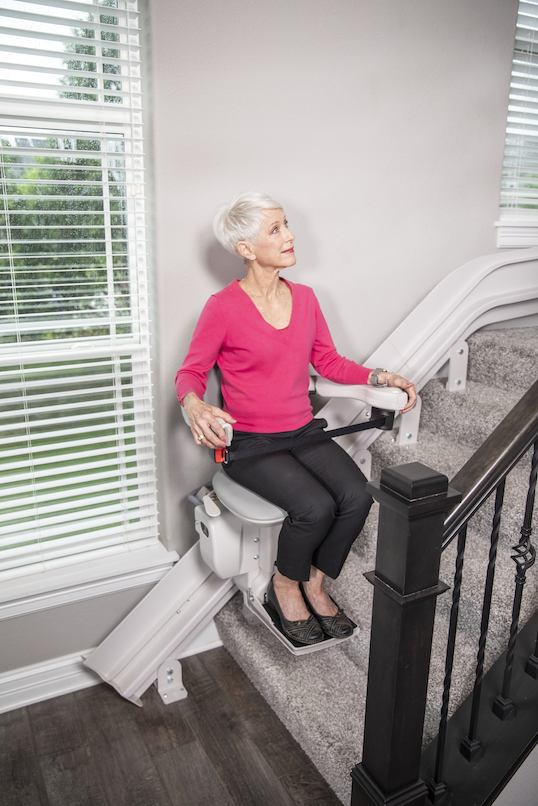
A stair lift is a mobility device with a chair that mounts to a rail, and it runs along the stair treads. The user sits on the chair and rides up or down.
Stair lifts are available in straight, curved, and outdoor models. They require the user to sit down and stand back up independently. Stair lifts are quick to install, particularly straight models.
What Is a Vertical Platform Lift?
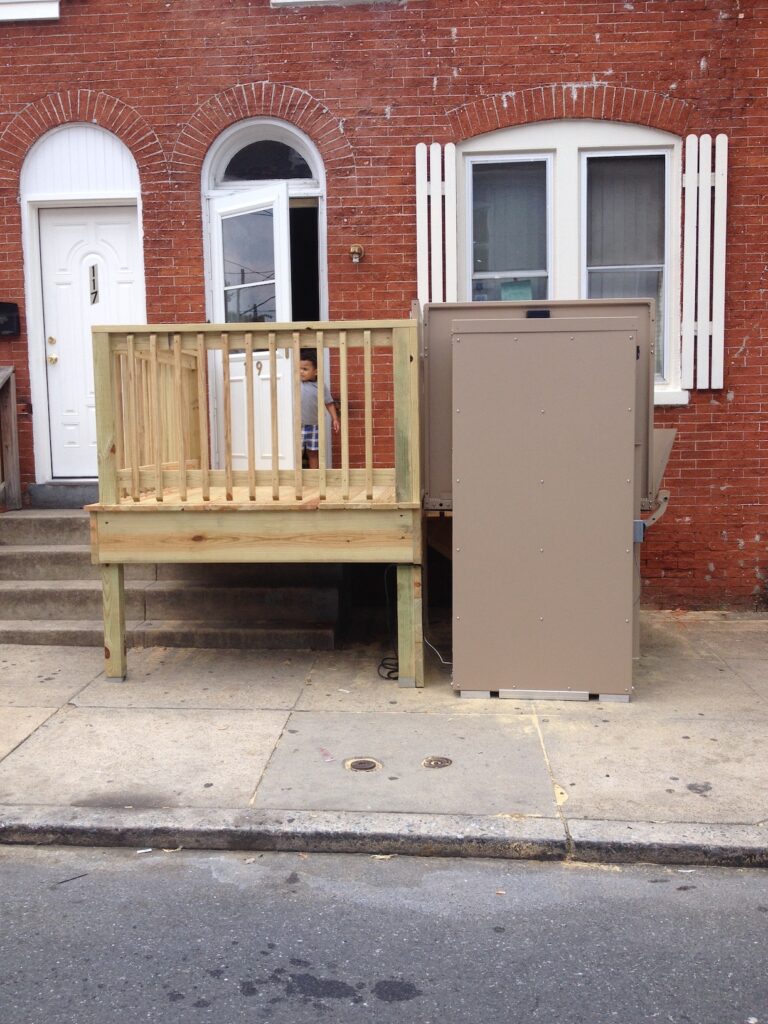
A vertical platform lift is a small open platform that moves straight up and down, (similar to a residential elevator). The user can stay in a wheelchair or scooter.
Vertical platform lifts are typically used for indoor floors, outdoor entryways, and raised decks. They require more square footage than a stair lift and may need permits depending on local codes.
What Are the Differences Between a Stair Lift and Vertical Platform Lift?
- Pricing: Stair lifts start around $3,400 for a straight model and go up to $27,000 for a curved model. Vertical platform lift prices vary, but typically run $12,000 to $30,000 or more, depending on rise height and configuration.
- Ideal for: Stair lifts suit people who can sit, transfer, and stand on their own. Platform lifts are the better fit for wheelchair or scooter users or anyone who cannot safely transfer in and out of a seat.
- Installation: Stair lifts mount to the treads and do not require structural changes (and don’t damage the walls). Platform lifts need a dedicated vertical space and can involve permits and a longer timeline.
- Space: Stair lifts fold away when not in use, leaving the staircase open for others. Vertical platform lifts need a dedicated area at the top and bottom of the travel path.
Do You Need a Stair Lift or a Vertical Platform Lift?
There are a few questions you can ask yourself if you’re unsure which mobility device is better for you.
- Can you sit down and stand up on your own? If yes, then a stair lift is a good choice.
- Do you use a wheelchair or a scooter? If yes, then a vertical platform lift is the right fit.
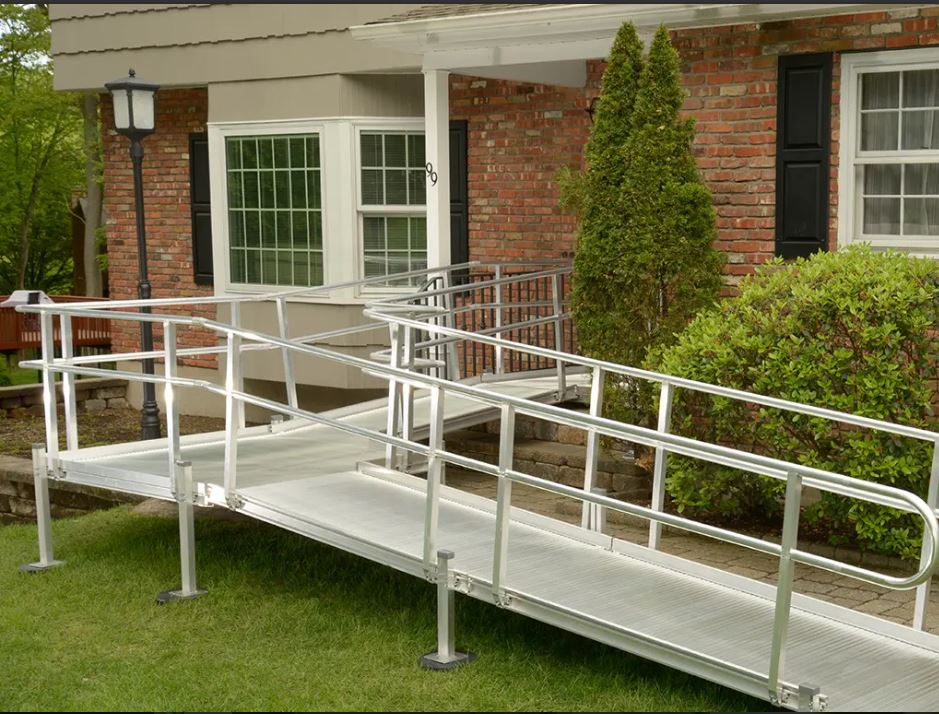
- Are you navigating a full flight of stairs or just a few steps at an entry? Depending on the stairs, you may even be able to install a small ramp, a stair lift, or, for longer journeys, a
- vertical platform lift.
- What is your budget? Vertical platform lifts are a bigger investment than stair lifts, and you’ll have to consider your budget before making the purchase.
What Independent Home Solutions Offers
At Independent Home Solutions, we offer free in-home assessments to help you determine which device suits your mobility and lifestyle.
Bruno stair lifts with Limited Lifetime Warranty coverage on major components. Serving Harrisburg, Lancaster, Reading, and York residents in Pennsylvania.
FAQs
Does Medicare cover a vertical platform lift or a stair lift?
No, Medicare usually doesn’t cover the cost of a platform lift or a stair lift.
Can a vertical platform be installed outdoors?
Yes, you can install a vertical platform lift inside a home if there is an open access between the base floor and the next floor.
Will a stair lift still work if my mobility needs change later?
Possibly, but it depends on how your mobility changes. Stair lifts require users to be able to stand up and sit down on their own
How long does each device typically last?
Both stair lifts and vertical platform lifts can last between ten and twenty years with regular maintenance.