
As you age, many life changes come your way. One is whether or not you want to age in place. With rising costs of assisted living facilities, it can be difficult to decide between moving into one and aging in place.
There are many factors to consider, including emotional, financial, and logistical ones. But the financial side of the decision is often misunderstood, and the gap between what people assume and what the actual costs are can be significant.
This article lays out a real-world cost comparison for Central Pennsylvania families, including what aging in place means financially, what assisted living really costs in the Lancaster, York, Harrisburg, and Reading areas, and what questions to ask when trying to figure out what’s right for you.
What Does Aging in Place Actually Cost?
Aging in place means staying in your home as you get older. Most homes require modifications and add-on support services to make this possible. The costs fall into a few categories.
1. One-Time Home Modifications
These are the upfront investments that make a home safer and more accessible. Common examples include:
- Grab bar installation in bathrooms
- Walk-in shower or walk-in tub conversions
- Stair lift installation
- Wheelchair ramp installation
- Widening doorways for wheelchair or walker access
- Non-slip flooring or surface treatments
Prices vary by home modification: stair lifts cost between $3,400 and $27,000, walk-in showers between $12,000 and $15,000, and wheelchair ramps between $6,000 and $10,000.
Most homeowners don’t need all of these at once. You can get it done in phases, starting with higher-risk fall areas such as the bathroom and the staircase. This spreads the cost and keeps upfront investments manageable.
2. In-Home Support Services
As care needs increase, some families bring in part-time or full-time in-home help. In Pennsylvania, this may include:
Home health aides and personal care assistants in Pennsylvania are typically paid by the hour. The cost adds up when care is needed for many hours per day, but for seniors who primarily need help with specific tasks rather than around-the-clock care, part-time in-home support is significantly less expensive than full-time facility care.
According to Caring, the average hourly pay for a home health aide is $26 per hour, and data from Fayer Family Homecare shows that a personal care assistant in Pennsylvania costs between $18 to $32 per hour.
3. Medicaid and Pennsylvania Programs That Help
Pennsylvania has several programs that can help cover the costs of aging in place:
- PACE and PACENET help seniors manage prescription drug costs, freeing up money for other care needs.
- Pennsylvania Medicaid’s LIFE program (Living Independence for the Elderly) provides community-based care services for qualifying seniors as an alternative to nursing home placement. It is available in some Pennsylvania counties.
- OPTIONS is a state-funded program through Pennsylvania’s Department of Aging that provides services like home-delivered meals, personal care, and home modifications to seniors who need help but do not qualify for Medicaid.
- Area Agencies on Aging in Lancaster, York, Dauphin, and Berks counties can assess your eligibility for local programs and connect you with local support services.
What Does Assisted Living Cost in Pennsylvania?
Assisted living facilities provide housing, meals, personal care, and some health services in a community setting and typically have high monthly costs.
| City | Private Room (Annual) | Private Room (Daily) | Shared Room (Annual) | Shared Room (Daily) |
| Harrisburg | $180,675 | $495 | $160,418 | $440 |
| Lancaster | $184,873 | $507 | $175,930 | $482 |
| Reading | $139,065 | $381 | $131,400 | $360 |
| York | $187,610 | $514 | $173,193 | $475 |
Prices from MedicalPlanningAssistance.org from the American Council on Aging. Current as of 2026.
Costs vary significantly based on the level of care required, the size and type of accommodations, and the specific facility. Memory care units for dementia or Alzheimer’s patients are typically more expensive than standard assisted living prices listed above.
What does assisted living not cover?
Most assisted living communities charge extra for services beyond the base rate, including medication management, incontinence care, transportation, and certain therapies. These add-ons can add hundreds of dollars per month to the total.
- Medicare coverage: Medicare doesn’t cover assisted living. It covers short-term skilled nursing care in certain situations, but the day-to-day room-and-board costs of assisted living are paid out of pocket until (and if) a person spends down enough assets to qualify for Medicaid.
- Medicaid and assisted living: Pennsylvania’s Medicaid program doesn’t cover assisted living in the same way it covers nursing homes. Some facilities participate in the Personal Care Home or LIFE programs, but availability and eligibility vary. You should check with each individual facility before signing a contract.
Cost Comparison: Aging in Place vs. Assisted Living
| Aging in Place | Cost |
| Home Modifications (Stair lift, wheelchair ramp, walk-in shower, grab bars, etc) | $40,000 to $50,000 |
| Home Health Aide | $2,080 (at $26 per hour) for 4 hours per day, 5 times a week |
| Personal Care Assistant | $2,560 (at max rate of $32 per hour) for 4 hours per day, 5 times a week |
| Total Costs | One-time investment of $40,000 to $50,000;
Yearly cost of help at home between $24,960 and $30,720 |
| Assisted Living | Cost |
| Private Room (Annual – Average for Harrisburg, Lancaster, York & Reading) | $173,055 per year |
| Shared Room (Annual – Average for Harrisburg, Lancaster, York & Reading) | $160,235 per year |
Non-Financial Factors That Matter
Cost matters, but it is not the only factor.
- Familiarity and comfort. Decades of research suggest that people who remain in familiar environments tend to have better cognitive and emotional outcomes as they age. The home carries memory, routine, and identity in ways a facility cannot replicate.
- Social connection. This goes both ways. Assisted living facilities offer planned activities, dining with peers, and a built-in social structure, which is genuinely valuable for seniors who are isolated at home. Aging in place can be lonely if the right support is not in place. Both arrangements require intentional attention to social connection.
- Safety. A well-modified home with the right supports is very safe. An unmodified home is not. This is where the investment in grab bars, walk-in showers, ramps, and stair lifts directly affects whether aging in place is truly viable.
- Family capacity. Aging in place works best when there is at least some family involvement or community support. Families that are geographically scattered or have limited capacity to provide informal help may find a care facility provides more consistent oversight.
Questions to Ask Before You Decide
If you’re unsure what would work better for you or your loved one, there are questions you can ask to determine the best solution.
- What is the current level of care, and how will that change over the next 3 to 5 years?
- What would it cost to make your home safe and accessible right now, and is that investment worth it given how long you or your loved one plans to stay?
- What are the actual costs of assisted living facilities near you and that you have toured in the Lancaster, York, Harrisburg, or Reading area (including add-ons)?
- Do you qualify for any financial grants or programs, and how would that affect the overall costs?
- What do you or your loved one actually want?
How Independent Home Solutions Can Support You
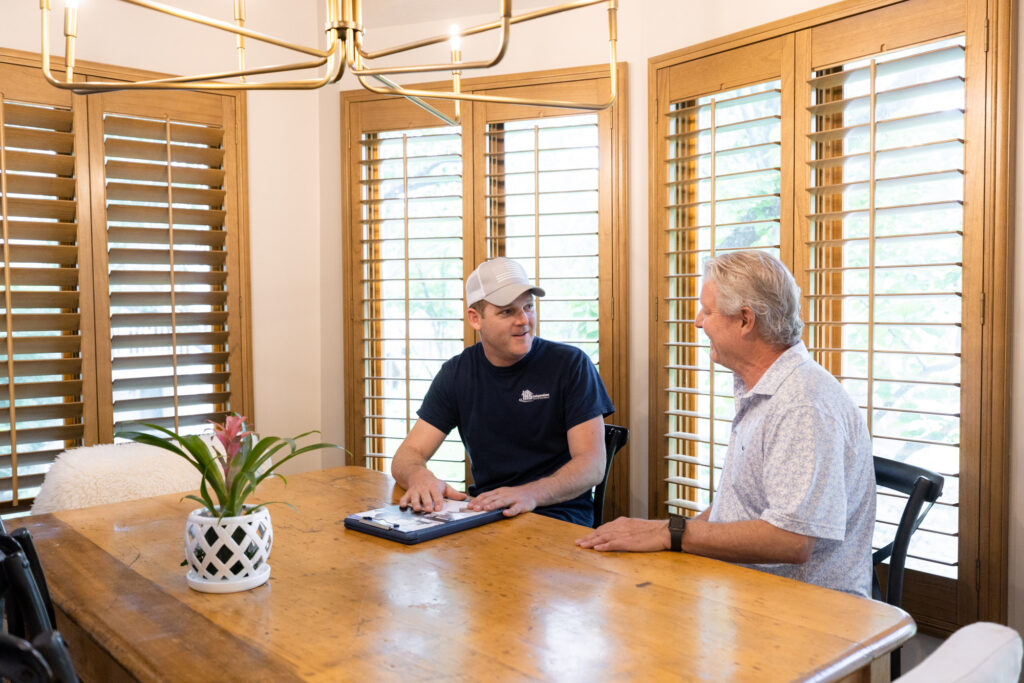
Independent Home Solutions (IHS) helps families assess what aging in place would actually require. Our free in-home assessments evaluate the home’s current accessibility, identify the specific modifications needed to make it safe and livable, and provide a clear estimate. Currently, IHS installs stair lifts, walk-in showers, and wheelchair ramps.
If a family is comparing the cost of home modifications against an assisted living facility, we want to give them an accurate picture of what the home option really looks like, so the comparison is honest.
Independent Home Solutions serves Harrisburg, Lancaster, Reading, and York. Call 717-393-8213 to schedule a free in-home assessment.

