
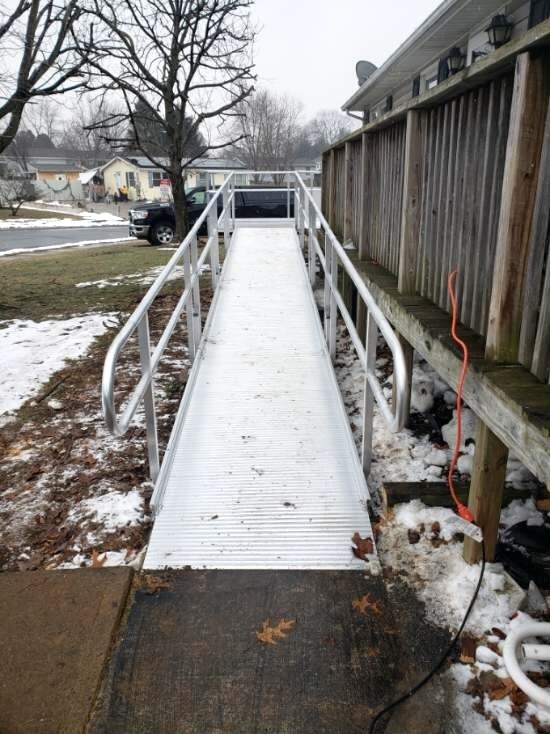
Steps can become a barrier for those using mobility aids such as wheelchairs, walkers, or other tools. When steps become a challenge, a wheelchair ramp gives you your home back. But once you decide a ramp is a good solution, the next question most Pennsylvania homeowners face is what kind: modular aluminum or wood?
Both help you safely move around your home and are widely accessible. The wheelchair ramp type you choose depends on your situation, your home’s layout, and how long you plan to use the ramp. Here is a clear look at how the two compare.
What Is a Modular Ramp?
Modular ramps are prefabricated aluminum ramps assembled on-site using standard sections. The sections bolt together in various configurations to fit your home’s step-rise and layout. They can be straight, L-shaped, or switchback, depending on what the space requires.
Because the components are standardized, modular ramps can be installed in a single day in most cases. They can also be disassembled and moved if you relocate or no longer need the ramp, making them a lifelong investment.
What Is a Wood Ramp?
A wood ramp is built on-site from lumber, usually pressure-treated wood rated for ground contact. A contractor builds it to fit your specific home, stairs, and entry layout. Like any custom construction project, it takes longer than a modular installation and cannot be moved once it is built.
Wood ramps are familiar-looking and blend in with most home exteriors, which some homeowners prefer for aesthetic reasons.
Wheelchair Ramps: A Comparison
1. Installation Time
Wheelchair ramp installation for modular units typically takes about 1 day, depending on the complexity. A wood ramp involves framing, decking, and finishing, which takes at least several days and longer if the weather interrupts the project. If you need access quickly, modular is the faster path and is easier to move in the future.
2. Cost
Modular ramps generally cost more upfront than wood ramps of a similar size. However, the price gap narrows over time when you account for wood maintenance and eventual replacement costs.
At Independent Home Solutions, modular ramps cost between $6,000 to $10,000.
A well-maintained aluminum modular ramp can last decades without needing significant repairs. A wood ramp will require regular upkeep and will eventually need to be replaced.
3. Durability and Weather Performance
This is one of the clearest differences between the two, and it matters in Pennsylvania.
Aluminum doesn’t rot, warp, or splinter. It can handle extreme summer and winter weather without deteriorating. The grated or textured surface of a modular ramp is designed to drain water and provide grip even when wet.
Wood is susceptible to moisture. Pennsylvania’s humid summers and wet winters accelerate wood rot if the ramp is not properly sealed and maintained. Even pressure-treated wood requires regular inspection, sealing, and eventual board replacement. Warping can create uneven surfaces that become trip or tip hazards over time.
4. Maintenance
Modular aluminum ramps require very little ongoing maintenance. Clear debris, periodically check that fasteners remain tight, and inspect the surface for any damage. That pretty much covers it.
Wood ramps need to be inspected at least annually for rot, splintering, loose boards, and fastener corrosion. Sealing or staining is typically needed every one to two years to extend the life of the wood. Failing to keep up with this maintenance can create a safety hazard.
5. Portability
If there is any chance you will move, or if the ramp is intended as a temporary solution while recovering from surgery or an injury, modular wins outright. Aluminum modular ramps can be disassembled, transported, and reinstalled at a new location. A wood ramp is permanent and stays with the house.
6. Appearance
This comes down to your personal preference, but it’s worth noting. Wood ramps have a traditional look that blends with most homes. Some homeowners feel a wood ramp looks less institutional than a modular ramp.
Modern modular ramps have improved significantly in appearance, and the functionality and safety advantages are substantial. Some homeowners add wood decking or skirting around a modular ramp to soften the look while keeping the aluminum structure underneath.
7. Safety
Both types can be built to ADA-compliant specifications with appropriate slope ratios, handrails on both sides, and landing platforms where needed.
The main safety advantage of modular ramps is their surface performance over time. The aluminum grating maintains consistent traction as the ramp ages. Wood surfaces can become slippery when wet, icy, or worn, and the risk increases as they degrade over time.
For Pennsylvania winters specifically, this matters. Ice on a wood ramp surface is a real hazard if the ramp is not treated promptly. Aluminum grating drains faster and tends to hold less standing water where ice forms.
What Type of Ramps Does Independence Home Solutions Install?
IHS installs modular aluminum ramps in Central Pennsylvania. We customize each installation to the rise of your home, the layout of your entry, and your specific mobility needs, whether you use a wheelchair, walker, or cane.
Call 913-228-3039 to schedule your free home assessment. Our service areas in Pennsylvania include Harrisburg, Lancaster, Reading, and York.
Frequently Asked Questions
Can a modular ramp handle a power wheelchair or scooter?
Yes, modular ramps are strong enough to handle heavier loads. During your assessment, let your installer know the combined weight of the chair and user so the correct rating can be confirmed.
What if my entry has a turn or limited space?
Modular systems can be configured in L-shapes, switchbacks, or other layouts to work around obstacles. This is one of the advantages of a modular system over a simple, straight wood ramp.
How long does ramp installation take?
Most modular ramp installations are completed in a single day. The exact time depends on the length and configuration.
Will a ramp damage my steps or entry?
No, they shouldn’t damage the stairs or entry. Modular ramps attach to the ground surface using footplates rather than bolting into your steps or foundation.
What happens if I no longer need the ramp?
A modular ramp can be disassembled and removed, leaving the entry essentially as it was. This is one of the reasons families choose modular for recovery situations or when the long-term need is uncertain.

